
Stone setting is where jewelry truly comes alive. A brilliantly cut moissanite or cubic zirconia is just a beautiful crystal — until a master jeweler secures it in a carefully crafted metal setting, transforming it into jewelry that sparkles on a finger, neck, or ear. This is custom jewelry manufacturing‘s most delicate and artful step, requiring precision, craftsmanship, and deep materials expertise.
In our complete jewelry manufacturing guide, we identified stone setting as Stage 6 — the point where all previous production work culminates in the finished piece. Now let’s explore every major stone setting technique, their quality standards, and what to consider when working with different gemstones.
The Art and Science of Stone Setting

About the Author: This guide is written by the production engineering team at Endless Jewel, a leading jewelry manufacturer specializing in OEM/ODM production for 500+ brands worldwide. Our ISO 9001-certified factory produces 200,000+ pieces annually with expertise across gold vermeil, rhodium plating, stone setting, and quality control.
✓ ISO 9001 Certified | ✓ 12+ Years Experience | ✓ Low MOQ 50 pcs | ✓ Gold Vermeil Specialist
Stone setting is both a traditional craft and a precision manufacturing discipline. At its core, it’s about three things:
- Security — The stone must stay in place through normal wear, daily activities, and occasional impacts
- Appearance — The setting should enhance, not obscure, the stone’s beauty, sparkle, and color
- Durability — Setting metal should withstand scratching, bending, and environmental wear
At Endless Jewel, we combine traditional hand-setting techniques with modern precision machining to achieve consistent, high-quality results at every production scale — from 50-piece MOQ custom orders to 5,000-piece wholesale collections.
Prong Setting

The most popular setting type worldwide, prong setting uses metal arms (prongs) to grip the stone at strategic points. It’s the classic engagement ring setting and works beautifully with virtually every gemstone and metal type.
Prong Setting Variations
- 4-Prong Setting — Minimum security, maximum stone visibility. The signature of most Tiffany-style solitaire engagement rings
- 6-Prong Setting — Superior security, ideal for larger or more valuable stones. Slightly less light penetration but more reassurance
- Cathedral Prongs — Elevated prong positions that create a cathedral-like arch, enhancing stone brilliance from all angles
- Stiletto Prongs — Thin, pointed prongs that minimize metal visibility for maximum stone prominence
- V-Shape Prongs — Prongs shaped as “V” that cradle the stone’s corners, common for princess and cushion cuts
Best for: Round stones, engagement rings, solitaire necklaces, any design prioritizing stone visibility and brilliance
Bezel Setting
A complete metal rim surrounds the entire stone edge, holding it in place from all sides. Bezel settings offer maximum security and a sleek, modern appearance.
Bezel Setting Variations
- Full Bezel — Complete metal border, best protection, ideal for active lifestyles
- Open Bezel — Bezel with openings at the bottom for extra light penetration
- Half Bezel — Metal on two opposite sides only, creating a distinctive modern look while retaining most security
- Flush Setting — Stone set completely flush with the metal surface, minimalist and very durable
Best for: Everyday wear pieces, men’s jewelry, vintage designs, emeralds, opals, and other delicate stones needing maximum protection
Pavé Setting
Pavé (pronounced “pah-VAY”) is French for “paved” — and that’s exactly what it looks like: multiple small stones set closely together with no visible metal between them, creating a continuous sparkling surface.
Pavé Setting Variations
- Micro-Pavé — Tiny stones (1–2 mm) set in micro-prongs or beads. Creates incredible sparkle but requires extreme precision
- Bead-Set Pavé — Stones seated in drilled holes and secured by small raised metal beads around the edge
- Grain-Set Pavé — Stones secured with tiny metal grains pushed around the edge using a graver tool
- Halo Pavé — A single center stone surrounded by a pavé halo of smaller stones. One of the most popular engagement ring styles
Best for: Engagement rings with halos, cocktail rings, statement necklaces, any design needing maximum sparkle and surface coverage
Channel Setting
A straight or curved metal channel holds stones side-by-side, with stones positioned horizontally and metal walls running along the top and bottom edges of the row.
- Security: Excellent — stones are protected on both sides
- Appearance: Clean, sleek, geometric. Popular for tennis bracelets and modern collections
- Stone shape: Works best with square, rectangular, or cushion-cut stones
Tension Setting
A dramatic modern technique where the stone is held in place entirely by metal spring tension — no prongs or bezels at all. The stone appears to float between two metal arms.
- Security: Good but depends on precision engineering — only suitable for harder stones (moissanite, diamond, sapphire)
- Appearance: Spectacular, minimalist, and eye-catching
- Difficulty: Extremely demanding — requires perfect calibration of metal springback
Gallery Setting
A decorative back setting featuring openwork metal beneath the stone, combining security with visual interest. The gallery allows extra light to enter the stone from below, enhancing brilliance.
Flush Setting
The stone is set completely flush with the metal surface — the hole is drilled exactly to stone size, and the stone is pressed in from behind. Creates a smooth, seamless surface ideal for rings that experience heavy wear.
Gemstone Compatibility Chart
Not every setting works with every gemstone. Here’s your quick reference:
| Gemstone | Mohs Hardness | Best Settings | Avoid |
|---|---|---|---|
| Moissanite | 9.25 | All types ✅ | None |
| Cubic Zirconia | 8.0 | Prong, Bezel, Pavé, Channel | Tension (edge case) |
| Diamond | 10.0 | All types ✅ | None |
| Sapphire/Ruby | 9.0 | All types ✅ | None |
| Amethyst/Citrine | 7.0 | Bezel, Prong, Gallery | Pavé (edge chipping risk) |
| Topaz/Aquamarine | 8.0 | All common types | Tension (rare) |
| Opal | 5.5–6.5 | Bezel (only) | Prong, Pavé, Tension |
| Emerald | 7.5 (brittle) | Bezel, Gallery | Tension, extreme prong angles |
At Endless Jewel, we specialize in moissanite and CZ setting across all techniques, plus full support for natural semi-precious and precious stones sourced through our ethical supply chain.
Quality Standards for Stone Setting
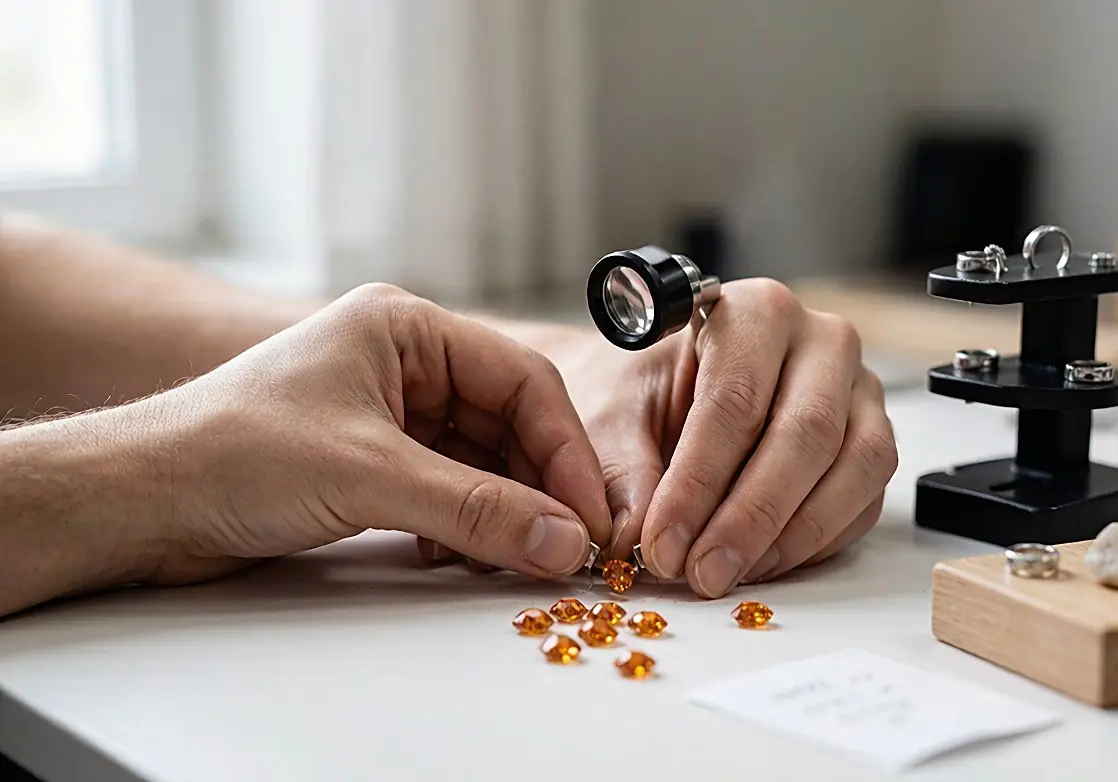
Our quality control team enforces strict international standards on every production batch:
- 10× Magnification Inspection — Every setting examined under magnification for prong precision, stone alignment, and metal work quality
- Security Pull Test — Random sample pieces undergo controlled pull tests to verify stone retention (industry standard: minimum 10 lbf / 45N force before movement)
- Visual Alignment Check — All stones in pavé or channel settings must align perfectly — no gaps, no misalignment
- Metal Finish — No sharp edges, burrs, or tool marks on setting metal. Smooth transitions from setting to base piece
- Stone Condition — Every stone inspected for chips, cracks, or inclusions before and after setting
- Setting Height — Consistent prong height and stone seating depth across all pieces in a batch
How to Choose the Right Setting
For brands designing new collections, consider these factors:
- Stone type and hardness — Soft stones (opal, emerald) need more protective settings (bezel, gallery). Hard stones (moissanite, diamond) can use any technique
- Lifestyle target — Everyday wear jewelry needs security (bezel, full prong). Special occasion pieces can be more delicate (tension, micro-pavé)
- Price point — Bezel settings cost more metal. Pavé requires more labor. Prong settings are the most cost-effective for solitaire styles
- Market positioning — Cathedral prongs signal luxury and tradition. Tension settings appeal to modern, minimalist markets. Micro-pavé conveys premium craftsmanship
- Maintenance expectations — Prongs can bend and need occasional re-tipping. Bezels rarely need repair. Set customer expectations accordingly
Working with Our Setting Experts
At Endless Jewel, stone setting is handled by our master jewelers — each with 10+ years of specialized experience. We offer:
- Setting consultation — Our engineering team recommends the best setting for your specific design and stone choice
- CAD optimization — Setting structure is optimized during CAD design phase for casting and setting success
- Prototyping — Physical prototypes verify setting quality before full production
- Batch consistency — Every production run maintains ±0.1mm tolerance on stone seating depth
- Warranty — Setting quality is covered under our production warranty
Ready to create gemstone jewelry with exceptional craftsmanship? Contact our team to discuss stone setting for your collection.
Frequently Asked Questions About Stone Setting
Can you re-set stones from old jewelry?
Yes! Our team can remove stones from existing jewelry and set them into new designs. This is popular for heirloom redesigns and engagement ring renovations. Contact us with photos and we’ll provide a quote.
How long does stone setting take?
For production orders, stone setting typically adds 5–10 business days to the manufacturing timeline, depending on stone count and setting complexity. Micro-pavé and tension settings require the most time.
Do you do custom stone cuts?
We work with certified gem cutters for custom stone shaping. If you have unique design requirements — special dimensions, unusual cuts, calibrated stone sets — our network can handle it. Lead times vary based on cut complexity.
Which setting is best for engagement rings?
This depends on lifestyle and preference. A 6-prong cathedral setting offers maximum security and brilliance. A bezel setting is most practical for active wearers. A halo pavé setting adds sparkle and makes the center stone appear larger. Contact our design team for personalized recommendations.


