

If you are wondering what is the most expensive birthstone, there is no single gemstone that is always the most valuable.
In general, diamond, ruby, emerald, sapphire, and alexandrite are among the birthstones most often associated with the higher end of the gemstone market. However, gemstone prices depend on quality, color, clarity, carat weight, origin, treatment, rarity, and market demand.
So, which birthstone is the most expensive? Diamond is commonly associated with the highest-value end of the birthstone market, but an exceptional natural ruby or alexandrite can sell for more per carat than an ordinary diamond.
If you are searching for the most expensive gemstone in general, the comparison is broader because many valuable gemstones are not birthstones. This article focuses specifically on gemstones recognized as birthstones.
If you are comparing birthstones by month before looking at price, our birthstones by month guide covers the commonly recognized stones, colors, and month-by-month options.
The birthstones most commonly associated with the higher end of the gemstone market are:
| Birthstone | Month | Main Factors Affecting Value |
|---|---|---|
| Diamond | April | Color, cut, clarity, carat weight |
| Ruby | July | Color, origin, clarity, treatment |
| Emerald | May | Color, clarity, origin, treatment |
| Sapphire | September | Color, origin, treatment, size |
| Alexandrite | June | Color change, rarity, clarity, size |
There is no universal price ranking because quality can vary enormously within the same gemstone type.
For example, a fine untreated ruby can be worth considerably more per carat than a commercial-quality diamond. Similarly, natural alexandrite with a strong color change can command an exceptional price because fine material is extremely rare.
This is why birthstones ranked by price should be treated as a general comparison rather than a permanent market ranking.

If you are looking for the most expensive birthstones in order, a general comparison of birthstones commonly found at the higher end of the market includes:
This is a broad comparison rather than a fixed market ranking. The value of an individual stone can change significantly depending on its quality and characteristics.
Diamond is commonly considered the most expensive birthstone overall, particularly when comparing high-quality stones with strong market demand.
Diamond value is traditionally evaluated using the 4Cs:
A well-cut diamond with desirable color and clarity can command a substantial premium, especially as carat weight increases.
However, saying that diamond is always the most valuable birthstone would be misleading. Exceptional natural colored gemstones can exceed the price per carat of many diamonds.


Ruby is one of the most valuable colored gemstones and is the July birthstone.
Its value is strongly influenced by color. Vivid, highly desirable red rubies with good transparency and strong quality can command very high prices.
Origin and treatment can also make a significant difference. Fine untreated rubies from historically important sources can attract particularly strong collector demand.
This is why the question “is ruby the most expensive birthstone?” does not have a simple yes-or-no answer. An exceptional ruby can be more expensive per carat than an ordinary diamond.
Ruby value is strongly influenced by color, clarity, treatment, and other quality factors, as discussed in the GIA ruby buying guide.


Emerald is May’s birthstone and is valued primarily for its distinctive green color.
For emeralds, color and transparency are particularly important. Natural inclusions are common and are often referred to as the gemstone’s “jardin.” Their presence does not automatically mean an emerald is low quality.
Fine emeralds with attractive color, good transparency, desirable origin, and limited treatment can command significant prices.
Colombian emeralds are particularly well known in the international gemstone market, although origin alone does not determine value.


Sapphire is September’s birthstone and is most commonly associated with blue.
The value of a sapphire depends on factors including:
Fine blue sapphires with strong color and desirable characteristics can reach very high values.
Sapphire also has excellent durability, with a Mohs hardness of 9, making it suitable for rings and other jewelry intended for frequent wear.


Alexandrite is one of the most unusual and rare birthstones.
Its most recognizable characteristic is its color-changing effect. Natural alexandrite may appear green or bluish-green in daylight and shift toward reddish or purplish tones under incandescent lighting.
A strong and attractive color change is one of the most important factors affecting its value.
Fine natural alexandrite with strong color change, good clarity, larger size, and desirable origin can be extremely valuable.
This also explains why alexandrite is often considered one of the rarest birthstones, even though it is not necessarily the most expensive birthstone in every market comparison.


If you are specifically asking what are the 3 most expensive birthstones, diamond, ruby, and emerald are commonly included among the higher-value birthstones.
However, this should not be interpreted as a fixed ranking.
An exceptional ruby or emerald can be worth more per carat than a lower-quality diamond. Fine alexandrite can also command exceptionally high prices because high-quality natural material is rare.
Therefore, the most valuable birthstone depends on the individual stone rather than its birth month alone.
Alexandrite is often considered one of the rarest birthstones, particularly when referring to natural, gem-quality material with a strong color-changing effect.
Rarity and price are related but are not the same thing.
A gemstone can be extremely rare but have limited commercial demand. Conversely, a more available gemstone can command high prices when quality and demand are strong.
June is also unusual because its recognized birthstones include alexandrite, pearl, and moonstone.
There is no universally accepted list of the three rarest birthstones, because rarity depends on the specific quality and type of material being considered.
Natural alexandrite with a strong color change is frequently discussed among the rarest. Exceptional ruby, emerald, and sapphire can also be extremely scarce when specific combinations of color, clarity, origin, size, and treatment are required.
This is why rarest birthstones should not automatically be treated as the same list as the most expensive birthstones.
The price of a birthstone is determined by several factors.
For many colored gemstones, color is one of the most important value factors. The ideal color depends on the gemstone. For example, ruby is generally associated with vivid red, while emerald is prized for attractive green and sapphire is strongly associated with desirable blue.
Clarity can affect value, but the importance of inclusions varies by gemstone. For example, emeralds commonly contain natural inclusions, while clarity expectations are different for diamonds.
A good cut can improve brilliance, color appearance, light return, and overall visual appeal.
Larger gemstones are often more expensive, but price does not increase at a simple rate. For rare gemstones, larger stones of exceptional quality can become disproportionately more valuable because large, high-quality material is much harder to find.
Origin can influence gemstone value when a particular source has a strong reputation for producing desirable material. However, origin should not be treated as a guarantee of quality.
Many gemstones are routinely treated to improve color, clarity, or appearance. Untreated natural gemstones can command premiums when their quality is exceptional, but the effect of treatment on value depends on the gemstone and the specific treatment.
Natural and laboratory-grown gemstones can have similar chemical and physical characteristics, depending on the gemstone, but their origins and market values are different. Natural gemstones are limited by geological supply, while laboratory-grown stones can provide more predictable availability and pricing.
For jewelry brands developing birthstone collections, this distinction can have a significant effect on product positioning and production costs.

Searches such as “birthstone prices,” “birthstones ranked by value,” “birthstones most expensive to least expensive,” and “top 12 most expensive birthstones” suggest that buyers often want a simple price list.
The problem is that gemstone pricing does not work like a fixed product catalog.
A more useful way to think about birthstone value is:
This means a high-quality ruby can outperform a low-quality diamond, while an exceptional tourmaline can be worth considerably more than an ordinary tourmaline.
The gemstone name establishes the category, but the individual stone determines much of the final value. If you want to look beyond traditional birthstones, our guide to rare gemstones covers other exceptionally scarce and valuable gems.
If you are looking for the cheapest birthstone, commonly affordable choices include:
However, there is no single gemstone that is always the cheapest.
Price still depends on color, clarity, size, treatment, origin, and whether the gemstone is natural or laboratory-grown.
For example, a fine and unusual variety of a normally affordable gemstone can be considerably more expensive than a commercial-quality stone of the same type.
These terms are often used interchangeably, but they describe different things.
| Question | What It Measures |
|---|---|
| Most expensive birthstone | Market value |
| Most valuable birthstone | Overall monetary value |
| Rarest birthstone | Availability of desirable material |
| Cheapest birthstone | Lower typical market price |
| Birthstones ranked by price | Relative market comparison |
For example, alexandrite is often described as one of the rarest birthstones, while diamond is commonly considered one of the most expensive birthstones overall.
Neither statement creates a permanent ranking because gemstone prices change according to quality and market conditions.


For individual jewelry buyers, how to choose the best and right birthstone jewelry depends on personal preference, budget, appearance, and intended use.
For jewelry brands, there are additional considerations:
For example, a premium birthstone collection may focus on diamond, ruby, emerald, sapphire, and fine alexandrite, while a more accessible collection could use amethyst, citrine, topaz, aquamarine, or other gemstones.
The gemstone should also match the jewelry type. Rings exposed to frequent impact generally require greater attention to gemstone durability and setting security than pendants or earrings.
For jewelry brands developing a personalized birthstone collection, gemstone selection is only one part of the custom jewelry process.
The manufacturer may also need to coordinate:
A manufacturer with gemstone sourcing and custom production capabilities can help brands develop a consistent collection across multiple birth months.
At EndlessJewel, we are an OEM and ODM manufacturer to support custom birthstone jewelry in 925 sterling silver, gold, vermeil and solid gold, with setting gemstone. Whether you are developing a single personalized birthstone necklace or a complete 12-month collection, the production specification can be adapted to the design, gemstone, metal, and target market.
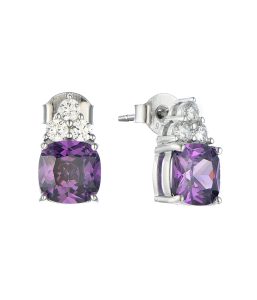
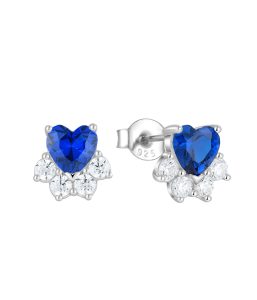
So, what is the most expensive birthstone? Diamond is commonly considered the most expensive birthstone overall, but there is no universal fixed ranking.
Among the birthstones most often found at the higher end of the market are: Diamond, ruby, emerald, sapphire, and alexandrite.
Ruby, emerald, sapphire, or alexandrite can sometimes exceed the price per carat of an ordinary diamond when the gemstone has exceptional color, rarity, origin, clarity, size, and treatment characteristics.
If the question is “what is the rarest birthstone?”, fine natural alexandrite is often considered one of the strongest candidates because high-quality material with a strong color change is exceptionally difficult to find.
Ultimately, birthstone value depends on the individual gemstone rather than the birth month alone.
The most expensive birthstones commonly include diamond, ruby, emerald, sapphire, and fine alexandrite. Diamond is often considered the most expensive birthstone overall, but exceptional ruby or alexandrite can exceed the price per carat of lower-quality diamonds.
Diamond, ruby, and emerald are commonly included among the three most expensive birthstones. However, there is no universal ranking because gemstone prices vary according to quality, size, origin, treatment, and rarity.
April is commonly associated with the most expensive birthstone because its birthstone is diamond. However, July’s ruby, May’s emerald, September’s sapphire, and June’s alexandrite can also reach very high values when the gemstones are exceptional quality.
Citrine, amethyst, and blue topaz are generally among the more affordable birthstones. Their prices can still vary significantly depending on color, clarity, size, treatment, origin, and quality.
Ruby can be one of the most expensive birthstones, particularly when it has exceptional color, clarity, size, origin, and limited treatment. However, ruby is not universally the most expensive because gemstone value varies from stone to stone.

Recommended for you


