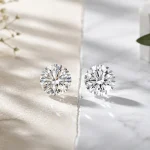
Yellow gemstones are gemstones and gem materials that display yellow, golden, yellow-green, or related hues. There is no single gemstone species called a “yellow gemstone.” Instead, yellow is a color found across different gemstone varieties, including yellow diamond, yellow sapphire, citrine, yellow topaz, golden beryl, yellow tourmaline, zircon, and amber. The appearance of a yellow gemstone can range from pale lemon and bright yellow to golden, yellow-orange, or yellow-green. Different stones also vary significantly in hardness, durability, rarity, treatment, and suitability for different types of jewelry.
For jewelry designers and brands, choosing a yellow gemstone involves more than color. Stone hardness, size, availability, consistency, setting requirements, and the intended jewelry style can all affect the final design and production process. This guide covers the most popular yellow gemstone names and types, their typical colors and Mohs hardness, how they are used in jewelry, and what to consider when selecting yellow gemstones for a jewelry collection. If you’re also interested in how yellow gemstones compare with other birthstones in terms of rarity and value, you can explore our detailed guide on the most valuable birthstones ranked.

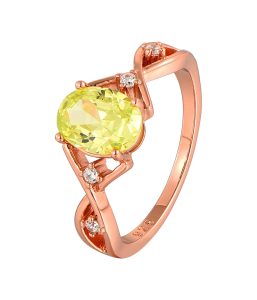
A yellow gemstone is not a single mineral species. It is a color-based category that includes different gemstones and gem materials that occur in yellow, golden, lemon, honey, or yellow-green hues.
Common examples include yellow diamond, yellow sapphire, citrine, yellow topaz, golden beryl, yellow tourmaline, yellow zircon, sphene, and amber. GIA also lists yellow garnets, chrysoberyl, apatite, opal, and several other less-common yellow gem varieties. GIA: Yellow Gemstones: Can You Identify Them?
For jewelry designers and brands, yellow gemstones are best compared by their color, hardness, durability, treatment, availability, and intended jewelry use.
The table below provides a quick comparison of popular yellow gemstones, including their typical color range, hardness, and common jewelry applications.
| Yellow Gemstone | Typical Color | Mohs Hardness | Common Jewelry Uses |
|---|---|---|---|
| Yellow Diamond | Pale yellow to vivid yellow | 10 | Rings, earrings, pendants |
| Yellow Sapphire | Lemon yellow to golden yellow | 9 | Rings, earrings, pendants, bracelets |
| Citrine | Pale yellow to orange-yellow | 7 | Rings, earrings, necklaces, bracelets |
| Yellow Topaz | Pale yellow to golden yellow | 8 | Rings, earrings, pendants |
| Golden Beryl / Heliodor | Pale yellow to golden yellow | 7.5–8 | Rings, earrings, pendants |
| Yellow Tourmaline | Yellow to yellow-green | 7–7.5 | Earrings, pendants, rings |
| Amber | Pale yellow to golden brown | 2–2.5 | Pendants, earrings, beads |
| Yellow Zircon | Pale yellow to golden yellow | 6.5–7.5 | Earrings, pendants, rings |
| Sphene / Titanite | Yellow to yellow-green | 5–5.5 | Earrings, pendants |
| Yellow Moissanite | Pale yellow to golden yellow | ~9.25 | Rings, earrings, pendants |
Hardness is only one factor in determining whether a gemstone is suitable for a particular piece of jewelry. Toughness, cleavage, setting design, and intended wear should also be considered.
The following gemstones are among the most relevant yellow gemstones for jewelry, ranging from highly durable precious stones to more affordable and distinctive materials. Their color, hardness, availability, and optical properties make them suitable for different jewelry designs.
1. Yellow Diamond
Yellow Diamond is one of the most exquisite and sought-after yellow gemstones in the world. Known for its vibrant golden hues that range from soft lemon to deep amber, the yellow diamond stands out as a rare and luxurious yellow precious stone that adds unmatched brilliance and elegance to any jewelry piece. This captivating color results from trace nitrogen elements trapped within the diamond’s crystal structure during its formation deep inside the Earth’s mantle. The most intense and valuable yellow diamonds are classified as “fancy vivid” yellow diamonds, prized for their rich, saturated color and exceptional fire.
With a perfect hardness rating of 10 on the Mohs scale, yellow diamonds are not only beautiful but also incredibly durable, making them ideal for engagement rings, earrings, necklaces, and other fine jewelry designed for daily wear. Celebrities and royalty often opt for yellow diamonds due to their unique allure and status symbol, thereby further elevating their prestige as one of the top yellow gems on the market. Whether set in classic or contemporary designs, yellow diamonds deliver a timeless sparkle and luxurious appeal that few other gemstones can match.
Yellow diamonds are particularly suited to fine jewelry where durability and color impact are important. Their high hardness makes them appropriate for rings and other pieces intended for frequent wear, while their saturated yellow color can also become the focal point of a statement design. For jewelry brands, the final choice depends not only on the diamond’s color but also on the desired stone size, cut, setting style, budget, and overall collection concept.
Hardness: 10 (Mohs scale).
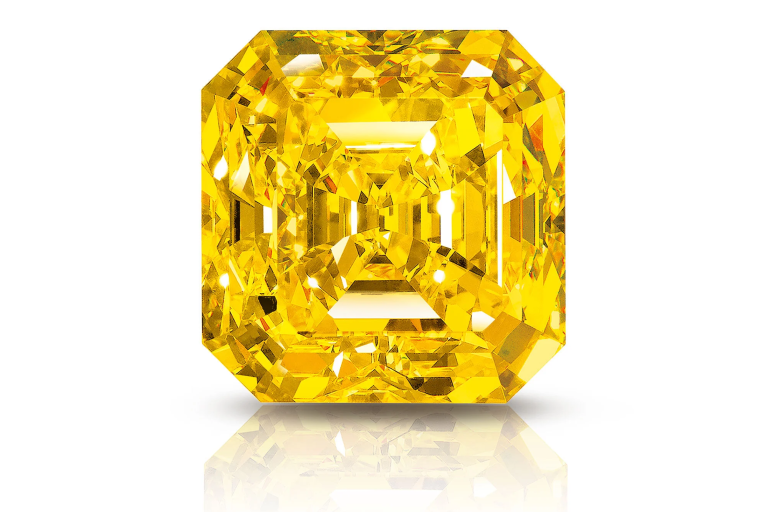
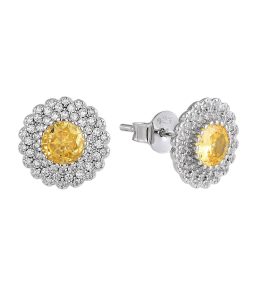
Yellow sapphire is a variety of corundum and is one of the most durable natural yellow gemstones commonly used in jewelry. It ranges from pale lemon yellow to richer golden tones and is valued for its combination of color, brilliance, and hardness.
With a Mohs hardness of 9, yellow sapphire is well suited to many jewelry applications, including rings, earrings, pendants and bracelets. Its durability makes it a practical option for designs intended for frequent wear.
Yellow sapphires can be sourced from several locations, including Sri Lanka, Madagascar, and Thailand. Their appearance and value can vary depending on color, clarity, size, treatment and origin.
For jewelry brands, yellow sapphire can be especially useful when a durable yellow center or accent stone is required without using a yellow diamond.
Hardness: 9.

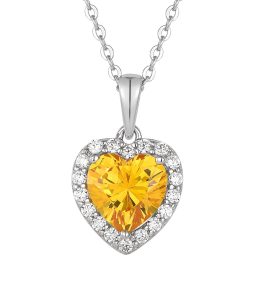
Citrine is one of the most popular and affordable yellow gemstones in the market, known for its vibrant shades that range from pale lemon yellow to deep golden amber. As a member of the quartz family, citrine stands out among yellow colored gemstones for its clarity, durability, and warm, sunny glow. What makes citrine a favorite choice for jewelry lovers is its versatility. Whether set in rings, pendants, earrings, or bracelets, citrine adds a cheerful and elegant touch to any piece. Its radiant color symbolizes positivity, energy, and abundance, making it not only a beautiful but meaningful yellow gem.
Citrine is one of the more accessible yellow gemstones for jewelry collections because its relatively moderate cost can allow designers to use larger stones and more substantial silhouettes. Its warm color also works well with different metal finishes and jewelry styles. With a Mohs hardness of 7, citrine is suitable for many jewelry applications, although rings and other frequently worn pieces should still be designed with appropriate protection against impact and abrasion. When developing jewelry collections, citrine can be a practical option when a warm yellow or golden appearance is desired at a more accessible material cost.
Hardness: 7.


Golden beryl, also known as heliodor, is a captivating yellow gemstone prized for its bright, sunny hues and exceptional transparency. It belongs to the beryl family, which also includes emerald and aquamarine, and stands out among yellow-colored gemstones for its brilliant clarity, durability, and warm golden tones.
The name “Heliodor” comes from Greek words meaning “gift of the sun,” perfectly describing this gemstone’s radiant glow. Its color ranges from soft pale yellow to vivid golden-yellow, with variations influenced by trace elements formed during its geological development. This wide color range makes golden beryl a versatile and elegant choice for fine jewelry.
With a Mohs hardness of 7.5–8, golden beryl offers good scratch resistance for many jewelry applications. It is commonly faceted to emphasize its transparency and warm golden color and can be used in rings, earrings, pendants, and other fine jewelry designs.
Golden beryl is found in several regions, including Brazil, Madagascar, Namibia, and Ukraine. Its desirability can vary according to color, clarity, size, treatment, and availability. For designers looking for a distinctive golden gemstone beyond the more familiar sapphire, citrine, and topaz, heliodor offers an interesting alternative. To understand why gemstones like golden beryl fall between the traditional categories of precious and semi-precious stones, check out our detailed guide on the difference between precious and semi-precious stones.
Hardness: 7.5–8 (Mohs scale)

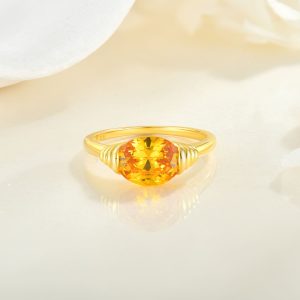
Yellow topaz is a transparent gemstone valued for its warm yellow to golden colors and good scratch resistance. It has a Mohs hardness of 8, making it harder than citrine and suitable for many types of jewelry.
However, hardness and toughness are different properties. Topaz has cleavage that can make it vulnerable to damage from strong impact, so appropriate setting and handling are important, particularly for rings.
Yellow topaz can range from pale yellow to deeper golden or honey tones. Its appearance, availability, treatment history, size, and clarity can all influence its suitability for different jewelry designs.
For jewelry brands, yellow topaz can be a useful option when a bright, transparent yellow gemstone is needed for earrings, pendants, or carefully designed ring settings.
Hardness: 8.

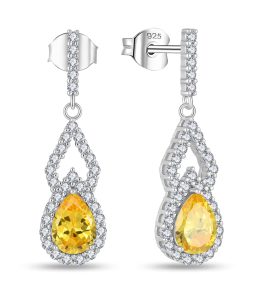
Technically, fossilized resin rather than a mineral, amber’s warm golden glow has been cherished for centuries. Amber is a unique and captivating yellow gemstone formed from the fossilized resin of ancient trees. Unlike most gemstones, which are minerals, amber is organic and prized for its rich golden hues and natural beauty spanning thousands of years. Its colors range from pale yellow to deep orange and golden brown, often displaying translucent or semi-transparent qualities. One of amber’s most intriguing features is its occasional inclusions of ancient plant material or insects, adding to its charm and historical significance.
Used in jewelry and decorative objects for centuries, amber is admired for its lightweight feel and smooth texture. It is frequently carved into intricate designs or polished into smooth beads for necklaces, earrings, and bracelets. Due to its softness compared to other yellow gemstones, amber is best suited for jewelry worn with gentle care.
Amber is an organic gem material rather than a mineral. It formed from fossilized tree resin and is known for its warm yellow, golden, orange, and brown colors. Some specimens contain preserved plant material or insects, which can add to their visual and collector appeal.
Amber is much softer than most mineral gemstones, with a Mohs hardness of approximately 2–2.5. This low hardness means amber can scratch relatively easily and is generally better suited to pendants, earrings, beads, and other jewelry designs where the stone is less exposed to impact and abrasion.
Amber has been used in jewelry for centuries and is commonly associated with deposits in the Baltic region, the Dominican Republic, and Mexico. Its organic origin, lightweight feel, inclusions, and wide range of colors make it distinct from mineral-based yellow gemstones.
Hardness: 2–2.5
Yellow zircon is a brilliant gemstone known for its fiery sparkle and vibrant yellow hues. Often mistaken for diamonds due to their remarkable brilliance and strong dispersion (the ability to split light into colors), yellow zircon makes a striking and affordable alternative to more expensive gemstones. Its colors range from pale lemon-yellow to deep golden tones, and the gem is admired for its clarity and eye-catching sparkle.
Yellow zircon has a Mohs hardness of approximately 6.5–7.5, depending on the material, so it can be used in many types of jewelry but may require more care than harder gemstones such as sapphire or diamond.
Its strong dispersion gives well-cut zircon noticeable fire, making it especially attractive in faceted designs. Yellow zircon can be used for earrings, pendants, and rings when the setting provides appropriate protection.
Yellow zircon is associated with deposits in countries including Cambodia, Sri Lanka, and Australia. For jewelry design, its combination of yellow color, brilliance, and strong dispersion gives it a distinctive appearance compared with more familiar yellow gemstones.
Hardness: 6.5 – 7.5.

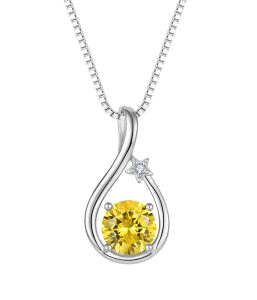
Yellow tourmaline, sometimes marketed as canary tourmaline, ranges from pale lemon yellow to stronger golden or yellow-green hues. As a member of the tourmaline family, it is valued for its color variety and distinctive appearance.
With a Mohs hardness of approximately 7–7.5, yellow tourmaline can be used in rings, earrings, and pendants when the design provides appropriate protection from impact.
Yellow tourmaline is less commonly encountered than some of the better-known yellow gemstones, which can make it an interesting option for jewelry collections seeking a less conventional yellow stone. Its suitability depends on the individual stone’s color, clarity, size, and availability.
Hardness: 7–7.5.
Sphene, also known as titanite, is a relatively uncommon gemstone valued for its strong dispersion and colorful fire. Its color can range from yellow and golden yellow to yellow-green.
With a Mohs hardness of about 5–5.5, sphene is considerably softer than diamond, sapphire, and topaz. It is therefore better suited to earrings and pendants or carefully protected jewelry designs than to rings exposed to frequent impact.
Its optical properties make sphene an interesting choice for collectors and jewelry designers looking for a distinctive yellow or yellow-green gemstone.
Hardness: 5-5.5
Yellow moissanite is a lab-grown gemstone known for its high brilliance, strong fire, and approximately 9.25 Mohs hardness. Its durability makes it suitable for many everyday jewelry applications, including rings, earrings, and pendants.
Because moissanite is produced in laboratories rather than mined as a natural gemstone, it offers jewelry brands an alternative when they want a durable yellow gemstone with a diamond-like appearance and a different cost structure.
Yellow moissanite can range from pale yellow to deeper golden tones. For jewelry design, the final appearance depends on the stone’s color, cut, size, and surrounding metal.
Hardness: 9.25 (Mohs scale).

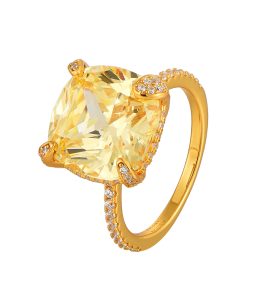
Yellow gemstones are not limited to one shade. Their appearance can range from very pale yellow to vivid golden, yellow-orange, or yellow-green tones. The exact color depends on the gemstone species, trace elements, geological formation, and in some cases treatment.
Pale yellow gemstones have a soft, understated appearance. They can work well in delicate jewelry designs and lighter color palettes.
Lemon yellow is a brighter, cooler yellow often associated with certain yellow sapphires, topaz, and other transparent gemstones.
Strong yellow colors can create a more noticeable focal point in jewelry. Yellow diamonds are particularly well known for their range of fancy yellow color intensities.
Golden yellow tones are warmer and can range from rich yellow to honey-like colors. Citrine, golden beryl, and some yellow topaz can display these shades.
Some gemstones transition from yellow toward orange. Citrine and amber are common examples, although their exact colors vary by specimen.
Yellow-green gemstones can include yellow tourmaline and sphene. These colors can create a less traditional alternative to pure yellow gemstones.
Amber commonly occurs in yellow, golden, orange, and brownish tones. Its organic origin and inclusions give these colors a different visual character from mineral gemstones.
Mohs hardness is useful when comparing yellow gemstones, but it should not be treated as the only measure of durability. Hardness describes resistance to scratching, while toughness describes resistance to breaking or chipping. Cleavage and the design of the jewelry setting also affect how well a gemstone performs in everyday wear.
| Gemstone | Approx. Mohs Hardness | General Jewelry Consideration |
|---|---|---|
| Yellow Diamond | 10 | Excellent hardness for everyday wear |
| Yellow Moissanite | ~9.25 | High hardness and suitable for frequent wear |
| Yellow Sapphire | 9 | Excellent hardness for many jewelry applications |
| Yellow Topaz | 8 | Good scratch resistance; protect from strong impact |
| Golden Beryl | 7.5–8 | Suitable for many jewelry designs |
| Yellow Tourmaline | 7–7.5 | Suitable with appropriate setting |
| Citrine | 7 | Suitable for many applications; use reasonable care |
| Yellow Zircon | 6.5–7.5 | Suitable with appropriate care |
| Amber | 2–2.5 | Soft; better for protected jewelry designs |
| Sphene | 5–5.5 | Best suited to lower-impact applications |
For jewelry manufacturers and designers, gemstone hardness should be considered together with stone shape, setting method, expected wear, and the overall design. A softer gemstone may still work very well in earrings or pendants even when it is less suitable for an exposed ring setting.
Color alone is not enough to identify a yellow gemstone. Several different gemstones can share similar pale yellow, golden, or yellow-green colors, so visual appearance should be treated as a starting point rather than definitive identification.
When identifying an unknown yellow gemstone, gemologists may consider:
For jewelry brands sourcing gemstones for production, identification and disclosure are particularly important when natural, treated, or lab-grown materials have different commercial requirements. GIA explains that its colored gemstone identification reports can identify the gemstone type and disclose detectable treatments and other characteristics. GIA: Colored Stone Identification
Yellow gemstones can occur naturally in their yellow color, while some stones may also be treated to improve or alter their appearance. Treatment is not necessarily a negative characteristic, but it is an important part of gemstone disclosure and purchasing decisions.
Depending on the gemstone, treatments may include:
Treatment practices vary between gemstone types, so there is no single rule that applies to every yellow gemstone. For jewelry brands, it is important to confirm whether stones are natural, treated, or lab-grown when sourcing materials for a collection. The treatment status can affect appearance, care requirements, sourcing decisions, and how the gemstone should be represented to customers. When the distinction matters to a project, ask your gemstone supplier to confirm the material and treatment information before production.
The terms “yellow gemstone” and “yellow crystal” are sometimes used interchangeably in general searches, but they are not always referring to the same thing. A gemstone is a material valued for use in jewelry or ornamental objects. A crystal describes a material with an ordered internal structure. Many gemstones are crystalline minerals, but the two terms describe different concepts.
For example, citrine, yellow sapphire, yellow topaz, and yellow tourmaline are all crystalline gemstone materials that can appear in yellow colors. When searching for yellow stones for jewelry, it is therefore more useful to identify the specific gemstone species and its properties rather than relying only on the broad term “yellow crystal.”
When selecting a yellow gemstone for a jewelry design, color is only one part of the decision. Consider the following factors:
Decide whether the design requires pale yellow, lemon yellow, vivid yellow, golden, yellow-orange, or yellow-green tones. Color should be evaluated together with the metal and overall collection palette.
Consider how the jewelry will be worn. Harder gemstones are generally better suited to exposed ring settings, while softer materials can work well in earrings, pendants, and protected designs.
Clarity requirements vary by gemstone. Some stones are valued for transparency, while distinctive inclusions can be part of the material’s character.
The cut affects brilliance, color appearance, and how the gemstone fits into the final jewelry design. Stone dimensions should also be considered before the setting is finalized.
For jewelry collections, the availability of suitable stone sizes, colors, and quality grades can affect whether a design can be reproduced consistently across multiple production batches.
Confirm whether the gemstone is natural, treated, or lab-grown when this information is relevant to the product and customer requirements.
The setting should match the gemstone’s hardness, toughness, shape, and intended use. Softer or more vulnerable gemstones may require more protective designs.
For jewelry brands developing a collection, these factors should be considered during the design and sampling stage rather than only after the gemstone has been selected.
Yellow gemstones can be paired with different metal colors depending on the visual direction of the collection.
For jewelry brands, the choice of gemstone should also consider stone size, setting style, metal material, plating, and production consistency. A gemstone that looks attractive as a single piece may require different design considerations when it is developed into a repeatable collection. If you are developing original jewelry designs, you can learn more about OEM vs. ODM jewelry manufacturing and how different development models affect customization and production.
For jewelry brands, selecting a yellow gemstone is not only a matter of appearance. The stone also needs to work with the manufacturing requirements of the final product.
The required gemstone size and shape should be considered during the design stage. Availability can vary between gemstone types, colors, cuts, and sizes.
Different gemstones require different levels of protection. Hardness, toughness, cleavage, stone shape, and setting style should be considered together when developing rings, earrings, pendants, or bracelets.
If a collection uses multiple pieces with yellow gemstones, consistency between stones becomes important. Variations in hue, saturation, clarity, and cut can affect the appearance of the finished collection.
Yellow gemstones can be combined with 925 sterling silver, brass, K-gold, or other jewelry metals depending on the product positioning. The final combination of gemstone color, metal color, plating, and surface finish should be evaluated during sampling.
A physical sample can help brands evaluate gemstone color, setting security, proportions, metal finish, and overall appearance before moving into larger production.
EndlessJewel provides OEM and ODM jewelry manufacturing services covering design development, CAD, sampling, stone setting, polishing, plating, quality control, packaging, and export support. Brands can discuss gemstone requirements as part of a custom jewelry project.
Yellow gemstones include a wide range of materials, from highly durable yellow diamonds and sapphires to accessible citrine, golden beryl, yellow topaz, tourmaline, zircon, and softer organic materials such as amber.
When choosing a yellow gemstone for jewelry, consider more than color. Hardness, toughness, clarity, treatment, stone availability, setting requirements, and the intended use of the finished piece can all affect the right choice.
For jewelry brands developing a new yellow gemstone collection, these considerations are especially important during design and sampling. Working with an experienced jewelry manufacturer can help coordinate gemstone selection, metal, setting, finishing, sampling, and production requirements.
EndlessJewel provides OEM and ODM jewelry manufacturing for brands, wholesalers, retailers, and private-label businesses, with support for custom design, CAD development, sampling, gemstone setting, plating, quality control, and production. For brands testing new designs or gemstone combinations, our guide to low MOQ jewelry manufacturers explains how smaller production runs can help reduce inventory risk while testing a collection.
There is no single gemstone species called a “yellow gemstone.” Yellow is a color that occurs in many different gemstones. Common examples include yellow diamond, yellow sapphire, citrine, yellow topaz, golden beryl, yellow tourmaline, zircon, and amber.
Several gemstone varieties can occur naturally in yellow or golden colors. Common examples include yellow sapphire, yellow diamond, citrine, golden beryl, yellow tourmaline, yellow zircon, sphene, and amber. The exact color range depends on the gemstone species and individual stone.
Citrine, yellow sapphire, yellow topaz, and other yellow gemstones are commonly encountered in the jewelry market. Availability varies by gemstone type, quality, size, treatment, and market.
“Precious” and “semi-precious” are traditional commercial terms rather than a strict modern scientific classification. Yellow diamond is traditionally classified as a precious gemstone, while citrine, amber, topaz, tourmaline, and many other yellow stones are often described commercially as semi-precious. The more useful way to compare gemstones is by their specific properties, such as hardness, rarity, quality, treatment, and market value.
There is no universally agreed single “rarest yellow gemstone.” Rarity can depend on natural color, size, clarity, treatment status, origin, and market availability. Fine natural fancy yellow diamonds can be exceptionally rare, while certain yellow chrysoberyl, tourmaline, beryl, and other collector gemstones can also be uncommon in particular qualities.
Yellow diamond has a Mohs hardness of 10 and is the hardest commonly known natural gemstone material. Other durable yellow options include yellow sapphire at 9 and yellow topaz at 8. Hardness should not be confused with toughness, however. A gemstone’s cleavage, fracture resistance, and jewelry setting also affect its practical durability.
Yes, but suitability depends on the specific gemstone and jewelry design. Yellow diamond and yellow sapphire are highly suitable for frequent wear because of their high hardness. Citrine and yellow topaz can also be used in many jewelry applications with appropriate care. Softer materials such as amber and sphene are generally better suited to jewelry designs that provide greater protection from impact and abrasion.
Yellow gemstones can be natural, treated, or lab-grown depending on the material. Treatment practices vary by gemstone, so brands should confirm the material and treatment information when sourcing stones for a jewelry collection.

Recommended for you